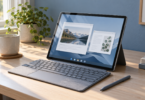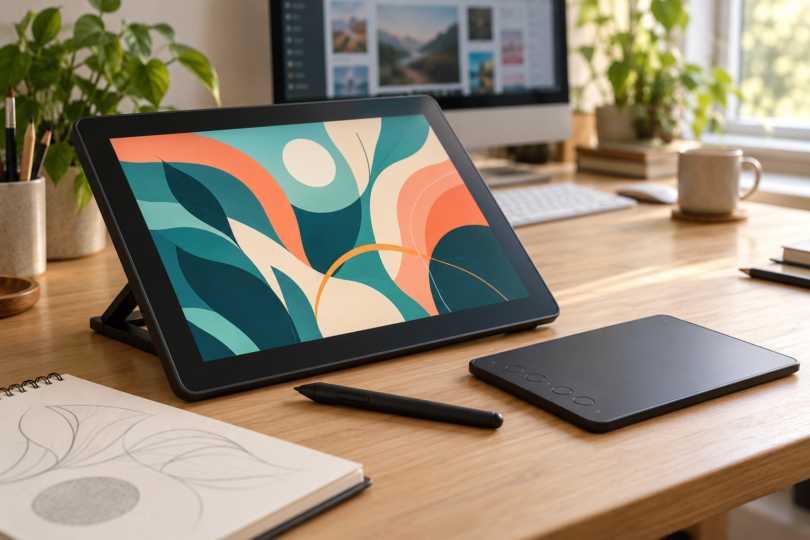

The best tablet for Adobe Illustrator depends on where you want the app to run. Our shortlist starts with Wacom Intuos Small for an existing desktop setup, Huion Kamvas 13 (Gen 3) for drawing directly on a connected screen, and iPad Air 11-inch (M4) for working in Illustrator on iPad. The first two need a host computer; the iPad uses its own version of the app.
These recommendations compare documented hardware, software requirements and the exact accessories in the selected packages. We have not tested these tablets hands-on. Choose the workflow first, then compare the complete cost of the tablet, pen, required cables and your Adobe plan.
Quick comparison: three useful choices
| Tablet and exact choice | Best fit | What runs Illustrator | Main purchase caveat |
|---|---|---|---|
| Wacom Intuos Small CTL4100, black, wired | Adding pen input to a computer you already use | Illustrator on a compatible Windows PC or Mac | No screen or Bluetooth; USB connection and driver needed |
| Huion Kamvas 13 (Gen 3) GS1333, black, stand package | Drawing on a display with physical shortcut controls | Illustrator runs on the connected compatible computer | Plan video, USB and power connections; USB-C video cable is separate |
| iPad Air 11-inch (M4), 128GB Wi-Fi, Blue | Illustrator work away from a desktop | Illustrator on iPad | Apple Pencil is separate; iPad and desktop features differ |
1. Wacom Intuos Small: best starting point for an existing computer
Choose the black CTL4100 wired Small if you already have a suitable Windows PC or Mac and want to add a pen without adding another display. Wacom lists a 6.0 × 3.7-inch active area, four customizable ExpressKeys and a battery-free pen with 4,096 pressure levels. This is the screenless Intuos, not an Intuos Pro or a Bluetooth model.
The compact drawing area makes this an appealing starting point for a crowded desk. You draw on the pad while looking at your monitor, so allow time to learn that hand-to-screen relationship. We would favor it for occasional freehand paths and brush work alongside keyboard shortcuts; someone who strongly prefers to draw directly on artwork should consider the Huion instead.
Pros: Small footprint, four physical shortcut keys and a pen that does not need charging. Cons: No display, no finger-touch input and no Bluetooth on this selected version. A compact active area may feel restrictive if you prefer broad arm movements.
The selected package lists the tablet, Wacom Pen 4K, USB-A cable and three extra standard nibs. Check your computer’s ports before ordering an adapter. Install the appropriate Wacom driver on Windows or macOS, and check Adobe’s current desktop requirements as well: a tablet’s broad operating-system compatibility does not make an older computer eligible for the current Illustrator release.
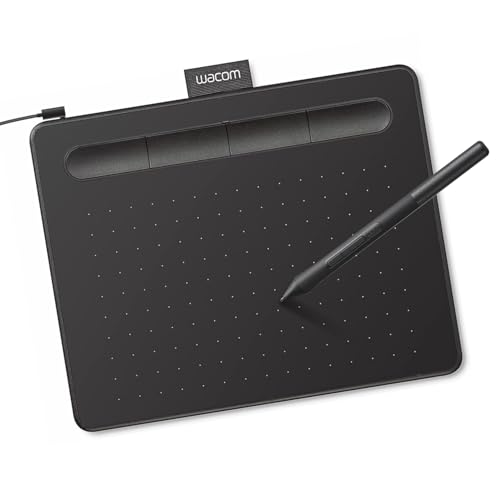
Wacom Intuos Small CTL4100, wired, black
As an Amazon Associate we earn from qualifying purchases.
2. Huion Kamvas 13 Gen 3: best for a connected drawing screen
The Kamvas 13 (Gen 3), model GS1333, is our pick here for artists who want their pen directly over their artwork. The selected black package includes the ST300 adjustable stand, PW600L pen and 3-in-1 cable. Its 13.3-inch laminated screen, five programmable shortcut keys and two dials create a different working experience from a screenless pad.
The reason to choose it is the combination of a drawing surface and physical controls. You can keep common commands close to the pen, and the manual explains that the two dials can be assigned different functions when the driver is installed and running. Treat the advertised 16,384 pressure levels as a specification, not proof that your curves will be smoother than on the Wacom.
Pros: Direct drawing on a screen, two dials, shortcut keys and a stand in this exact package. Cons: It needs a computer, cables occupy desk space, and the separate full-featured USB-C cable can add to the total. It is a pen display, not a standalone Android tablet or an iPad alternative that runs Illustrator by itself.
Check the GS1333 connection instructions before buying. The included 3-in-1 lead uses HDMI plus USB connections for data and power. A single USB-C connection needs a video-capable port and the appropriate full-featured cable; an ordinary charging cable is not an equivalent substitute. Huion specifies USB 3.1 Gen 1, DisplayPort 1.2 or later and sufficient power for that route. Some setups need additional power.
The stand is optional in Huion’s general manual, but included in the specific Amazon package linked below. If you switch listings, confirm the box contents again. Also distinguish Gen 3 / GS1333 from the original Kamvas 13 and other similarly named models.

3. iPad Air 11-inch M4: best for a standalone iPad workflow
Choose the iPad Air 11-inch (M4), 128GB Wi-Fi in Blue if portability matters more than keeping every desktop tool in one device. This selected model is MH314LL/A. Apple specifies a laminated 2360 × 1640 display and support for Apple Pencil Pro and Apple Pencil (USB-C). Illustrator runs as the iPad app, with no host computer required for that workflow.
Adobe’s published compatibility guidance says an unlisted iPad that supports Apple Pencil can use Illustrator on iPad. Combined with Apple’s Pencil support for the M4 Air, that makes it a relevant standalone option. Still, check the current app listing, operating-system requirements and your Adobe subscription before committing.
For pressure-sensitive drawing, budget for Apple Pencil Pro. Apple’s comparison explicitly gives it pressure sensitivity and says Apple Pencil (USB-C) lacks that feature. Both connect to this iPad, but they are not interchangeable for pressure-based strokes. The selected tablet box contains the iPad, USB-C charge cable and 20W adapter; it does not list a Pencil.
Pros: A self-contained tablet, laminated screen and compatible pressure-sensitive Pencil option. Cons: Pencil purchase adds to the total, 128GB must also accommodate your other apps and files, and the iPad app does not provide full desktop feature parity. Before replacing a computer, try a representative Illustrator document on the iPad and check the operations you use most.
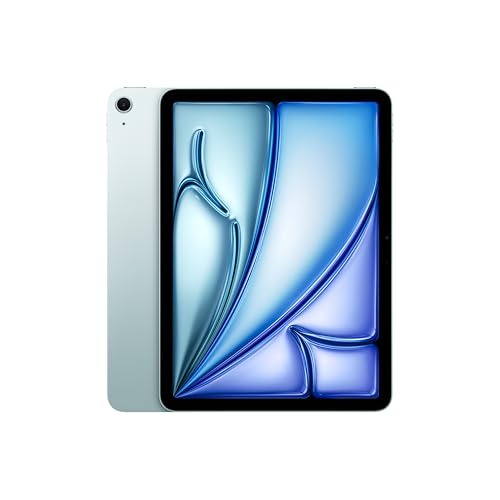
How to choose a tablet for Illustrator
Start with the app and your existing computer
For desktop Illustrator, buy the tablet to suit a computer that already meets Adobe’s technical requirements. Neither the Wacom nor the Huion supplies the computer’s processor or memory. For iPad, review Adobe’s desktop-versus-iPad limitations and test your own files. Hardware compatibility with Android or ChromeOS is not evidence that desktop Illustrator runs on those systems.
Match the drawing surface to your habits
A small screenless pad suits a desk where the keyboard and main monitor already work well. A pen display suits someone who wants to draw on the visible artwork and can accommodate the connections. A standalone iPad suits drawing away from that desk. Compare the actual active area and workspace layout, not just a diagonal screen measurement.
Check pressure in the software, not only on the box
More advertised pressure levels do not establish a better result for your work. Wacom’s Illustrator pressure guide for Windows explains that the chosen brush must be configured for pressure. For a calligraphic brush, set Size to Pressure and choose a nonzero variation range. Test light and firm strokes in the app before deciding that a new tablet is necessary.
Compare the complete package
Add up the device, pen, adapters, stand and software you actually need. The Wacom package includes its pen; this Huion package includes a pen and stand; the iPad’s Pencil is separate. Check the exact model, color, storage and bundle at checkout, especially if a retailer offers several variations on one page. Avoid paying for accessories that do not fit your chosen device.
Frequently asked questions
Do I need a drawing tablet to use Illustrator?
A tablet is a workflow choice. Consider one if pen input would help your freehand work; do not buy a screen or a high pressure-level specification just because it appears on a feature list. Start with the tasks you find awkward in your current setup.
Can the Wacom Intuos or Huion Kamvas run Illustrator without a computer?
These selected models are computer peripherals. For desktop Illustrator, connect them to a compatible Windows PC or Mac. The Kamvas screen does not make it a standalone computer. The iPad Air is the standalone choice in this shortlist, using Illustrator on iPad.
Is Illustrator on iPad the same as desktop Illustrator?
No. Adobe documents differences in supported creation and editing features. Use your real files to check the iPad workflow before relying on it for everything, and retain desktop access if your required operations are unavailable.
Which Apple Pencil should I get with this iPad Air?
Apple lists Pencil Pro and Pencil (USB-C) as compatible. Pick Pencil Pro if pressure sensitivity matters: Apple says the USB-C Pencil does not support pressure sensitivity. Verify that you are buying the M4 Air and its matching Pencil, because compatibility varies between iPad generations.
Why are my strokes the same width despite using a pressure-sensitive pen?
The brush may still be set to Fixed. In the Windows Illustrator setup documented by Wacom, change the calligraphic brush’s Size control to Pressure and give it a variation range. Also confirm the device’s appropriate driver is installed. If pressure works in the driver but not the app, check the app’s brush settings before replacing hardware.
Which one should you buy?
Start with Wacom Intuos Small when you already have a suitable computer and want a compact pen-input tool. Choose Kamvas 13 Gen 3 when drawing directly on a screen and using dials matters more than keeping cables off the desk. Choose iPad Air 11-inch M4 with Pencil Pro when you want a standalone setup and have checked that Illustrator on iPad handles your work.